

-
- Straight couples use wedding vows to support same-sex marriage
- NJ group makes waves in California marriage debate
- Lawmaker vows to fight for morals
- Texas county debates use of needle-exchanges
- McGreevey divorce lawyers expand on finances
- Lohan fires back at police ‘gay’ remark
- National News Briefs
- World News Briefs
san diego
Youth camp trains college-age activists
Local student becomes advocate for GLBT college students
Published Thursday, 14-Aug-2008 in issue 1077
Attending a camp for young GLBT and ally adults was a life-changing experience for Ryan Gesmunode, an undergraduate at San Diego State University.
“For me as a gay man who is still closeted, it was the first time I have ever been around other gay, lesbian, bisexual, and transgender people,” he said.
Gesmunode experienced a sense of acceptance and security he had never known before.
“It was the first time that I was truly myself and the very first time that I felt safe,” he said.
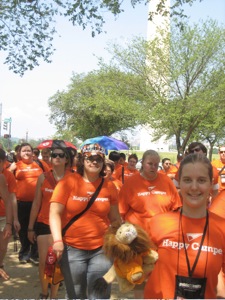
The LGBT Summer Leadership Camp, one of several programs of the nonprofit organization Campus Pride, is the only camp in the nation to bring young adult leaders from the GLBT community together to develop leadership skills and raise awareness of social justice issues.
“The whole idea behind the camp was to bring young adult leaders for social justice skills building, and to work on their personal development as leaders and looking at their own identity; understanding their ethics and values as leaders; and kind of creating a moral compass as a leader that will benefit them throughout their lives,” said Shane Windmeyer, executive director of Campus Pride.
The camp, called “Happy Campers,” consists of five days of typical camp activities with a series of workshops and discussions on leadership development focusing on social justice and GLBT issues. Workshop and discussion topics include identity and privilege, stereotypes and bias, transgender 101, the GLBT movement today, and spirituality in the GLBT community. Camp activities include a movie night, a trip to Washington D.C., and entertainment by GLBT musical artists, writers and drag performers.
The camp follows a “first come, first serve” mantra, although students are required to pay a registration fee of $595.
“It’s self selection, meaning they apply to go to camp,” Windmeyer said. “But because they have to pay for it often times the money comes from their college campus … So, [depending on whether their college can pay for their registration] a lot of applicants are selected before we get their registration.”
Students who apply are typically sophomore and junior college students who are involved in government, or involved with GLBT and ally student groups as leaders, or who are involved in leadership in other campus groups.
Gesmunode, who is planning to be a dorm resident advisor at SDSU this fall, heard about the camp through his director.
“One of our directors came up to me and he said, ‘Hey you know what? There is this leadership camp for LGBT students and it’s a great way to build leadership skills and to network and to bring more LGBT activism to our campus,’” said Gesmunode.
“Fortunately the director of my office, the one I work for, did have a budget to send undergraduate students for development skills,” said Gesmunode. “So, they were able to pay for my registration and my flight.”
The camp itinerary exposed Gesmunode to a range of GLBT subject matter.
“I never knew that there were lots of LGBT issues and a lot of activism going on. It was the very first time I was exposed to it,” said Gesmunode.
But “Happy Campers” isn’t all about education. Facilitating students’ social networks and bonds is another goal.
“It’s just not about what they learned but it’s about the lifelong friendships that they create,” Windmeyer said. “And you know camp can create connections like no other program can because people are forced to be with one another, and it kind of creates that family bond, and for an LGBT or ally student that familiar bond is important to them.”
Gesmunode had never had a GLBT friend before camp.
“It’s sad to say but I really didn’t’ have a so-called gay friend. All my friends have happened to be straight. And I left that camp with lifelong friends who I talk to at least once a week through Facebook or text,” he said.
At the end of camp, students create an action plan to take back to their campus.
“We do that through what we call a crystal ball leadership activity, where [campers] create their own crystal ball and how they want their campus to look in five or 10 years from now,” Windmeyer said. “And in their crystal ball they come up with projects that will get them to the point where campus is seen as more LGBT friendly.”
Some of the projects include creating gender neutral restroom facilities; single-stall bathrooms and locker rooms in their athletic center; and policy changes related to including sexual orientation in a college’s nondiscrimination statement, and gender identity expression issues, Windmeyer said.
Gesmunode saw more GLBT campus programming and activism in his “crystal ball.”
“I feel like, you know, my campus is somewhat conservative and I don’t see a lot of gay and lesbian outreach programs,” he said. “I don’t see as much organizations. And what I’m thinking is that I’m going to take what I have learned from this camp and see what I can do to have a stronger LGBT community on campus.”
Registration for the 2009 camp begins in February. For more information, visit www.campuspride.org/camp.asp. 
|
|
Copyright © 2003-2026 Uptown Publications