

-
- U.S. elections: A referendum on men behaving badly?
- New Jersey schools adjust to transgender teacher
- New Jersey recognizes same-sex unions
- Gay GOP politicians see offices vacated
- Studds’ spouse denied U.S. death benefits because he’s gay
- Marriage amendment opponents maintain money lead
- National News Briefs
- World News Briefs
feature
The cult of personality
A guide to campy film favorites
More facts about your favorite cult classics
Published Thursday, 26-Oct-2006 in issue 983
What do these things have in common: a mother with severe OCD, a sweet transvestite from Transylvania, a pole-dancing showgirl, pill-popping dolls and a director with an angora sweater fetish? Why, this is the stuff from which cult classics are made of.
Cult movies do not follow any set formula. Some of the films that achieve cult status start out with the best of intentions: high production values, big-name stars – the whole shebang. But somehow they end up fading from the local Cineplex. Others are made on shoestring budgets and feature a handful of never-been-heard-ofs hoping to strike it big in material that is, well, less than “screen ready,” for lack of a better term.
While either example seems likely to fade into obscurity, something happens to a handful of these films. It’s as if they rise from the ashes, phoenixes of celluloid, soaring away from box office disappointment and critical drubbing to become something stronger, something that manages to leave an indelible stamp on the movie landscape nonetheless: a cult classic.
There are other breeds of cult movies among us. Some movies that do well at the box office can become cult movies; even The Wizard of Oz is considered one! With many films treading a very fine line between cult and camp, there seems to be a symbiotic relationship between cult movies and gay audiences; you couldn’t have one without the other.
Certainly gay moviegoers gravitate toward these underdogs of cinema for a variety of reasons – a drama that ends up a comedy, an independent spirit that infuses a low-budget film. Love for cult movies goes way beyond the ability to quote its dialogue, chapter and verse. Perhaps we see something of ourselves in these films; something that makes us watch them over and over again.
We went to the experts themselves – the fans – to find out why we love these movies. Here’s a look at some of the movies that have captured the gay imagination throughout the years.
Histrionics
The term “cult movie” was birthed in the late 1970s and pertained to fans of cheap horror movies that dealt with devil cults. Cult movies were widely associated with a core group of fans who were drawn to films not for their artistic merit but for their shared ridicule of a film. Sounds tailor-made for gay audiences!
But to witness the birth of a cult movie legend, we must travel back two decades prior to a time when science fiction and horror movies were experiencing a renaissance.
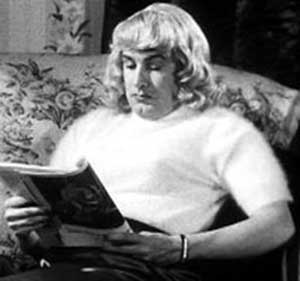
Director Ed Wood didn’t start out his career intending to be known for making some of the worst films ever; he had dreams of being likened to Orson Welles for his artistic vision and Hollywood credibility. But something happened along the way. Perhaps it was his first envelope-pushing feature film, Glen or Glenda, a tale of a man (played by Wood himself) who liked to dress up in women’s clothing, which mirrored Wood’s real-life angora-sweater-wearing preferences.
Undeterred by the less-than-stellar reception of his directorial debut, Wood went on to write and direct Jail Bait, Bride of the Monster and The Violent Years, and then came Plan 9 from Outer Space, which has been called the worst movie ever made. Produced on an untied-shoestring budget, everything about this movie was destined to make it disappear from theaters right from the get-go.
Star Bela Lugosi died before filming commenced, and Wood used test shots he had made of the actor, eventually using his wife’s chiropractor as Lugosi’s stand in (using a cape to cover his face) even though he was a good head taller than the Dracula star. The special effects consisted of UFOs that were made out of pie tins, the dialogue was full of inanities like, “It’s hard to find something when you don’t know what you’re looking for,” and the acting was wooden at best. But Plan 9 from Outer Space somehow managed to defeat death and was immortalized as a cult classic.
Ironically, Wood is more popular dead than alive. In 1994, Tim Burton directed the film Ed Wood, which stars Johnny Depp and Martin Landau. Landau even snagged the Oscar for his portrayal of Bela Lugosi. Wood’s real life ended in the 1970s, at which time, sadly, he was relegated to directing pornography.
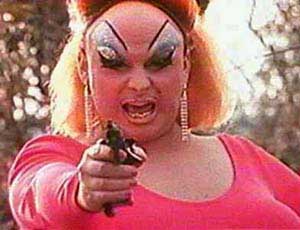
Around the same time Wood was making porn, movies got a shot in the arm from a young director by the name of John Waters, who started making films in a very innocuous way. During the 1960s, he made silent 8mm and 16mm films and would start a word of mouth campaign about his screenings in rented church halls in Baltimore, Md. (where he has filmed every single one of his films). Eventually, his brand of independent cinema brought the notion of political correctness to its knees and featured a core cast of actors willing to do anything for the young, avant-garde maverick, including eating real dog feces on camera (Divine in Pink Flamingos).
Waters continued on his cinematic trek to uncover the dark heart of America with such offerings as Female Trouble, Desperate Living and Polyester, before becoming more mainstream with Hairspray, Cry Baby, Serial Mom, Pecker, Cecil B. Demented and A Dirty Shame.
Glenn Rivera of Mission Hills is a connoisseur of John Waters’ movies and cult movies in general.
“I think that John Waters is a big part of our gay culture; who else was watching Female Trouble and Pink Flamingos and all those movies but gay people?” Rivera asks. “There was the hippie culture that caught onto it, but gay people made it more popular and were able to emulate it because it was part of our lifestyle. He took the most extreme situations and he exaggerated them.”
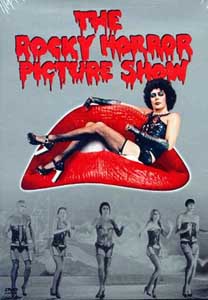
The face of cult movies would be forever changed in 1975 with The Rocky Horror Picture Show, the film that launched a thousand midnight showings. Upon its release in 1975, the film starring Tim Curry, Barry Bostwick and Susan Sarandon was considered a failure and did not play in more than a few test-market cities.
On April Fools Day in 1976, a young advertising executive at 20th Century Fox named Tim Deegan had the genius idea of convincing the Waverly Theatre in New York to start showing Rocky Horror at midnight screenings. Almost immediately the film attracted a core group of devotees, pioneering Rocky Horror’s famed audience participation. They included Bill O’Brien, the first person to dress as Dr. Frank-N-Furter; Lori Davis, who dictated the protocol of all things Rocky; and Louis Farese, who is credited as the first person to yell lines back at the screen. Around Halloween in 1976, more audience members began showing up in costume.
Today, the adlibbing of Rocky Horror is a well-oiled machine that has a very specific rhythm, although it has been updated to reflect the current landscape of pop culture. For example, there are references to wheelchair-bound Timmy of “South Park” whenever Dr. Scott is shown on screen.
Although screenings of Rocky Horror are not as popular as they were back in the day, the film has grossed $135 million since its release, which makes it the highest grossing film to have never played in more than 200 theaters at one time, and is considered the pantheon of cult movie success.
The new face of cult
While the popularity of midnight movies has waned since the days of Rocky Horror, they are alive and well in San Diego. La Jolla Village Cinemas serves up a new cult movie experience every Saturday at 12:00 midnight, and the films range from cult classics like Plan 9 from Outer Space to Raiders of the Lost Ark. Sure, it would be just as easy to rent or buy these films and screen them at home, but there would be a key component missing from the equation, according to Brad Hesselbrock, manager of the La Jolla Village Cinemas.
“The theater experience is always going to be – as great as modern technology is for in-home theaters – it will still never be the same as going to a theater, seeing it on a ginormous screen with a bunch of other people coming together,” he said. “It’s a whole other experience when you’re there with a bunch of other people and you’re interacting with the film.”
Hesselbrock feels there will always be room for the midnight movie experience.
“I continue to see them growing. San Diego’s been without a midnight movie series for a long, long time, since the days of The Guild [theater],” he said. “But all over the country it’s been revived over the last several years, and it continues to grow in strength. It’s basically because of the demand of the patrons, the people that come out to see it. They want more and more types of shows, and more of them.”
Indeed, the very face of cult movies is undergoing a lift, with newer films like Fight Club, Clueless, Heathers, Chicago, Boogie Nights and Girls Will Be Girls being added to the ever-growing list of movies Hollywood has produced with a gay sensibility.
And that’s the beauty of Hollywood: It tries to play it safe with film fare, but every once in awhile a new film will squeak through that will become a brand new cult movie experience.
Gay and lesbian favorites
“It’s funny how gay men like the same movies growing up,” Rivera says. “It’s something you can’t help; it’s part of what we have inside of us which sets our sexuality apart.”
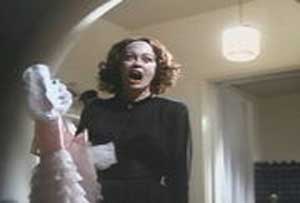
Mommie Dearest is widely regarded as the prime example of good intentions gone awry on a cinematic scale. The film, which is based on Joan Crawford’s daughter Christina’s best-selling memoir, stars Oscar-winning actress Faye Dunaway as Crawford.
So what happened? How did Dunaway become a gay icon and why did her portrayal as Crawford become a gay cult classic?
“Number one, her outfits are fabulous. Number two, her attitude and the way she experiences life resonates with a lot of people,” says former San Diegan Jeff Best, who currently resides in Matthews, N.C. “Her anger and her fear and her confusion and all those core things resonate with people. And even though it’s dysfunctional, people still can relate to it. And I think that’s why it’s so popular.”
He ought to know. This is a film Best has seen more than 300 times. How does he keep the experience fresh after so many viewings, you may ask?
“I invite people that haven’t experienced it to watch it, so they’re naïve to the plot and what’s going to happen” Best says. “Another thing that keeps it fresh is every single time I watch it, I pick up something new that I haven’t seen or observed, or a prop or a facial expression or a line.”
Is it really such a surprise that a film based on Crawford’s life has become a cult classic? This is an actress who appeared in black face in Torch Song and, unfortunately, capped off her illustrious film career by co-starring with a half man/half ape named Trog.
On a side note, Anne Bancroft was originally cast to portray Joan Crawford in Mommie Dearest, and Crawford once said in an interview that if any actress were to play her in the story of her life, she would like Faye Dunaway to do it. Also, the infamous line, “Tina! Bring me the axe!” was a real line Crawford uttered in the 1964 film Straight Jacket.
Crawford was part of an ensemble cast of actresses in The Women, which was filmed in 1939 and centered around a group of friends dealing with the infidelity of central character Mary’s (Norma Shearer) husband at the claws of one Crystal Allen (Crawford). Twelve years after “the talkie” was introduced to films, The Women upped the ante with its lightning-speed dialogue, especially when delivered by Rosalind Russell, who would later star as the gay fave Auntie Mame in the film of the same name. The lure of bitchy barbs like, “There’s a name for you ladies, but it isn’t used in high society – outside of a kennel,” proved to be a hoot for gay audiences. Yet the film can be viewed as somewhat sexist because it depicts the female demographic as nothing more than catty and chatty.
Fun facts: Though filmed in black and white, the original cut of the film featured a 10 minute Technicolor fashion parade.
In keeping with the all-female theme of the film, the animals used in The Women were all female.
The film was remade as a musical and retitled The Opposite Sex in 1956. It stars June Allyson and Joan Collins.
Crawford starred alongside her nemesis, Bette Davis, in Whatever Happened to Baby Jane? In the film about sibling rivalry taken to extremes, Crawford plays the wheelchair-bound Blanche Hudson, whose invalid state was caused by an “accident” at the hands of her sister (Davis). Davis gives a bravado performance as the mentally unbalanced Baby Jane Hudson, a very faded child star from the vaudevillian era who longs to bask in the spotlight once more. And she’ll do anything to make her dream a reality, including tormenting and imprisoning her sister in their shared home and feeding her a nice balanced diet of rats for dinner!
Fun facts: The Hudson sisters teenaged next-door neighbor was played by Davis’ real life daughter.
Davis had a Coca-Cola machine installed on set to irk co-star Crawford, whose late husband was the CEO of Pepsi.
Another film that deals with aging Hollywood style is Sunset Boulevard. Gloria Swanson is ready for her close-up as Norma Desmond, a one-time silent movie star, who enlists a writer, Joe Gillis (William Holden), to script her comeback movie.
Fun facts: Director Billy Wilder initially sought out Greta Garbo and Mary Pickford for the role of Norma Desmond. Both Montgomery Clift and Fred MacMurray withdrew from playing Joe Gillis.
Don’t let The Bad Seed’s Rhoda Penmark (Patty McCormack) fool you with her pigtails and penchant for dressing like the Swiss Miss girl; she’d be just as comfortable to knock you off for a pair of tap shoes as she would throwing a tea party. Young Rhoda becomes suspected of offing those around her to get what she wants.
Fun facts: The film had three separate endings that were shot during production.
All three female leads (Nancy Kelly, Eileen Heckart and McCormack) were nominated for Academy Awards.
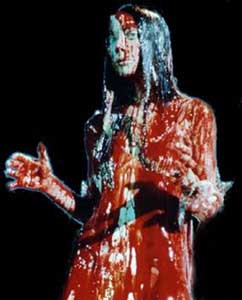
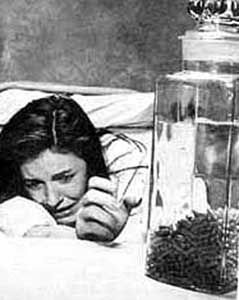
On paper, the horror film Carrie may not seem a likely candidate for inclusion as a gay cult movie.
But when you think about it, Carrie White (Sissy Spacek) could have very easily passed for a gay teen in terms of the amount of torment she’s subjected to before she finally snaps and wreaks psychic vengeance on her cruel classmates. Plus, her mother (Piper Laurie) would lock her in the closet to pray, and she befriends the female gym teacher, too.
Fun facts: Melanie Griffith auditioned for the title role. Betty Buckley, who played the gym teacher Miss Collins, later starred in the ill-fated Broadway musical Carrie as Mrs. White.
Amy Irving, who plays Sue Snell, and Priscilla Pointer, who plays Mrs. Snell, are mother and daughter in real life.
Both Piper Laurie and Sissy Spacek received Academy Award nominations for Carrie, which is unprecedented for a film in the horror movie genre.
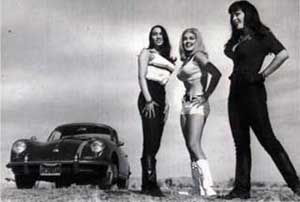
Faster, Pussycat! Kill! Kill! was director Russ Meyer’s “ode to the violence in women,” according to its tagline. In the movie, three go-go dancers, headed up by the hotheaded Varla (Tura Satana), go on a crime spree that includes kidnapping, robbery and murder.
Fun facts: Lead pussycat Satana legally owns her likeness and image, so whenever Meyer wanted to change the poster artwork or re-release the project, it required Satana’s permission, and Meyer would sometimes have to pay her all over again.
Alfred Hitchcock’s Psycho probably isn’t the first horror film you associate with being a gay cult movie. But it has all the earmarks to be so. The film follows a cross-dressing killer, whose kindler, gentler alter ego, Norman Bates (Anthony Perkins), all but screams gay. Throw in a mother fixation and – voila! – a gay cult movie is born.
Fun facts: Psycho was the first American film to show a toilet flushing.
The Valley of the Dolls is about three women (Patty Duke, Barbara Parkins and Sharon Tate) who find refuge from the demands of their lives in Hollywood by turning to drugs and alcohol. The film was based upon the best-selling novel by Jacqueline Susann, and is chock full of one-liners like: “I wouldn’t pay attention to that. You know how bitchy fags can be!” Seeing Susan Hayward lip sync her way through the musical number “I’ll Plant My Own Tree” should be worth the price of admission alone, but then there is also the famous wig-snatching scene between Hayward and Duke to consider.
Fun facts: Judy Garland was originally signed on to play Helen Lawson (Susan Hayward’s role), but reneged and walked off the set with a sequined pantsuit that she would wear during concert performances.
Lesbian cult classics
Noticing a theme with the films that we adore? The vast majority of them feature strong female characters.
“What we’ve been taught, growing up as gay men, is to pay attention to those strong female characters as we have,” Rivera explained. “That’s why a lot of the movies are based on strong female characters, but we’ve turned them around to an extent.”
And while it may seem like gay men have cornered the market on gay cult movies, there are certainly lesbian cult classics.
Robin Rigby, who facilitates the Sapphic Cinema Film Series at The Center on the fourth Friday of the month (with the exception of November and December, when it will take place on different dates due to the holidays), says it makes perfect sense to her why cult movies seem to be male-centric.
“There are more movies, in general, geared toward men,” she says. “There are more men making movies. Whether they be gay or straight, naturally they would tend to make movies that would appeal to them. So it’s a combination of factors.”
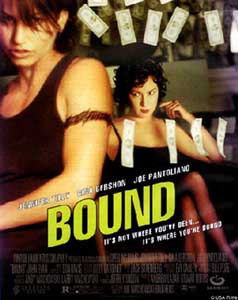
Bound stars the sizzling onscreen duo Jennifer Tilly and Gina Gershon as two women who have a love affair while trying to make off with $2 million in mafia money. There are plenty of plot twists and enough girl-on-girl action to make this one a strong favorite.
Fun facts: Noted sex author Susie Bright was the technical consultant for the bedroom scenes, and even had a cameo in the film as the lesbian that Corky (Gershon) tries to pick up in a bar.
According to Rigby, The Hunger is “an awful movie in so many ways, but it’s got so many things going for it that make it a classic.”
Among these things is the sexiness of Catherine Deneuve seducing Susan Sarandon, she says. And the film’s legion of female fans concurs wholeheartedly. In the 1983 vampire flick, there is the aforementioned lesbian angle plus David Bowie as the third component of a bizarre love triangle.
Fun facts: For a film widely associated with being a vampire flick, The Hunger is decidedly against the grain. There are no fangs and the creatures of the night can endure sunlight.
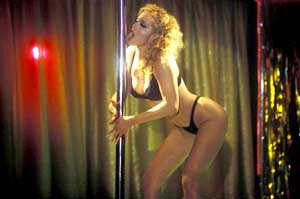
Showgirls is a textbook case of a film with high hopes that ended up being one of the campiest things ever committed to celluloid.
The recipe for disaster is quite simple: Take one former teen actress (Elizabeth Berkley of “Saved by the Bell”), hire Basic Instinct’s screenwriter Joe Eszterhas and director Paul Verhoeven, set the film in the Las Vegas stripper/showgirl world and add a high dose of nudity, and you have Showgirls.
Showgirls ranks high up on Rigby’s list of cult favorites.
“I personally love Showgirls because it’s just so trashy,” she says. “The way I always describe that movie to people who haven’t seen it is that [it’s] the worst thing that you could possibly imagine happens to somebody, and you’re like, ‘Oh my god, that’s so awful!’ Then, 20 or 30 minutes later, something even worse is happening to some other character. It just spirals out of control until it’s just so atrocious. It’s like watching a train wreck.”
Fun facts: The filmmakers initially sought Madonna to play Gina Gershon’s character, Cristal Conners, and Drew Barrymore to play Berkley’s character, Nomi Malone.

|
|
Copyright © 2003-2026 Uptown Publications